
3/5/26
World Press Freedom Day on May 3 gave the Commonwealth the opportunity to reflect on how well, or how badly, member states live up to their declarations of a respect for free media, and the recognition of its central role in democratic society.
International media monitoring organisations report a negative picture of many Commonwealth countries, saying media freedom is in decline, with many states maintaining colonial-era laws to censor media and stifle dissent. All this as violence against journalists remains high, with censorship and harassment and a “climate of fear” in several regions.
The CJA has been at the forefront of the campaign to reverse this trend with its Media Principles on Freedom of Expression and the Role of the Media in Good Governance https://www.cpahq.org/media/2brjum13/commonwealth-principles-media-freedom_updated-2022.pdf The Principles were adopted by Commonwealth heads of government to promote a free, independent, and safe environment for journalists, advocate for legal reforms to remove restrictions on free speech and ensure accountability for violence against media workers. But many states with restrictive laws have yet to act on them.
To mark World Press Freedom Day, the CJA linked up with YourCommonwealth, the platform for the voices of young people, to look at the state of media freedom, in an online forum.
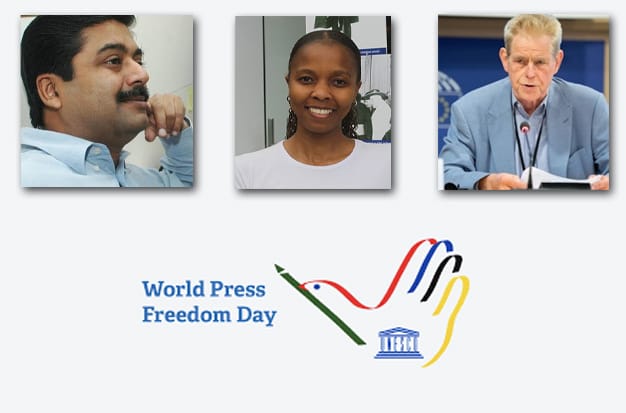
Joyce Wachau, of Your Commonwealth, pictured above, joined CJA representatives Jayanta Chowhdury, from India, left, and William Horsley of the UK, right.
“We should be able to feel safe knowing that should any harm befall us when out in the field chasing the truth, someone will be held accountable … “
able to feel safe knowing that should any harm befall us when out in the field chasing the truth, someone will be
Ms Wachau said freedom of expression and media freedom were well outlined in the constitutions of many countries, but there was a huge gap between what was on paper and what was really happening.We should be able to feel safe knowing that should any harm befall us when out in the field chasing the truth, someone will be held accountable
“As a Kenyan journalist, I can confidently say that we continue to face harassment when covering events. If the law and the policies are at work, then why do we have newspapers every week talking of a journalist who was unlawfully detained, cameras destroyed, footage deleted and some even killed? It only goes to show that there is no respect for journalists, nor the law that is supposed to protect us,” she said.
“Media regulatory bodies in Kenya are doing a great job on shedding light whenever journalists are harassed and the freedom of media is curtailed, but I believe that there is still room for improvement, to make sure our safety goes beyond press releases and strict warnings. We should be able to feel safe knowing that should any harm befall us when out in the field chasing the truth, someone will be held accountable, prosecuted and we get compensated for equipment destroyed.”
Worse for women
The problems were particularly bad for females, she said. For them, online bullying was prevalent, usually aimed at lowering morale and discouraging them from pursuing stories.
“Completing my degree in mass communication had me thinking that I was ready to conquer the world. I was that confident. I get out here and I realise it is a completely different world, where no one taught me how my mental health state can deteriorate so badly, just because the weight of some stories is too heavy to carry. You are thrown into the field where you are expected to be the camera person, the writer and the social media manager and to deliver the work by unrealistic deadlines,” she said.
On a positive note, Ms Wachau said the collaboration involved in getting a good story out was a great opportunity to learn from each other.
“The use of short videos, poetry, podcasts, photographs, music, points us to the unified direction of being responsible and intentional, in delivering trustworthy information and it will be enabled only and if, we have press freedom.”
A “state of emergency” in Commonwealth media? And a call for action
William Horsley of the CJA is a former BBC foreign correspondent and a long-time advocate for press freedom. He told the seminar that journalists in many Commonwealth countries face obstacles and threats of harm that can be said to add up to a “state of emergency”.
He pointed to multiple prosecutions for cybercrime and defamation as well as police assaults against journalists in Nigeria, violent crackdowns on dissent around recent elections in Uganda and Tanzania, the jailings and denial of basic rights of journalists in Bangladesh on groundless murder charges, the lack of proper legislation to protect journalists’ sources in India, and the appalling 96 percent rate of impunity – indicating an almost total failure of justice – in the cases of over 200 hundred journalists killed in 19 Commonwealth countries since 1993, according to UNESCO figures.
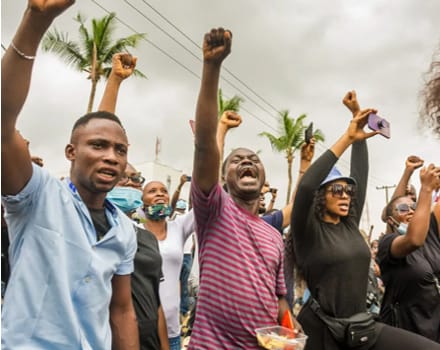
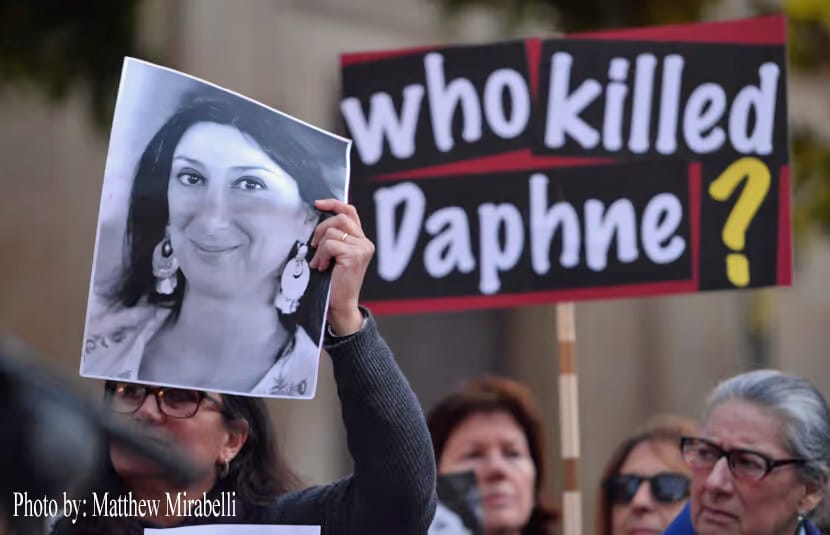
William highlighted the totemic and targeted killings of journalists Deyda Hydara in Gambia in 2004, Onifade Emmanual Pelumi in Nigeria in 2020, ‘Tiger Eye’ journalist Ahmed Hussein-Suale in Ghana in 2019, Gauri Lankesh in India in 2017 and Daphne Caruana Galizia in Malta, also in 2017. In each of those murder cases one or more of those responsible have continued to escape justice, leading to a climate of self-censorship and fear among other journalists.
This alarming record is compounded, William remarked, by the collective inaction and near total silence of the Commonwealth in the face of the widespread stifling of the fourth estate by intimidation and misuses of law in certain states. That failure is scrutinised in detail in the landmark publication Who Controls the Narrative? Legal Restrictions on Freedom of Expression in the Commonwealth , which was published in September last year by the Commonwealth Human Rights Initiative, Commonwealth Journalists Association, and Commonwealth Lawyers Association.
The report’s comprehensive audit of media-related laws in all 56 Commonwealth member states finds that almost three quarters of them still maintain criminal sanctions for defamation, sedition and blasphemy. They call for such laws to be amended or repealed to align with international legal standards. A common theme of testimonials cited in the report from media workers across all Commonwealth regions – Africa, Asia, the Americas, Europe and the Pacific – is a growing trend for state authorities to misuse or directly control supposedly independent media regulators in order to suppress or exclude critical voices and prevent scrutiny of corruption and abuses of power.
The report’s authors spotlight the urgent need for Commonwealth governnments to fulfil the public pledge they made in 2024 to implement the Commonwealth Principles on Freedom of Expression and the Role of the Media in Good Governance which the Heads of Government unanimously adopted at their meeting in Samoa. In those ‘Commonwealth Media Principles’ the political leaders also agreed they have a responsibility to ensure that law-enforcement officers provide proper protection for journalists and that they must take ‘decisive action’ to end impunity.
Open up to scrutiny
William observed that recent conversations among Commonwealth civil society, human rights, and media-related organisations, show a major groundswell of public demands for the Commonwealth to establish and support genuine accountability mechanisms to hold member governments to the rhetorical pledges they have made in the Commonwealth Charter, the new Media Principles, and other declarations.
In her Strategic Plan for 2025-2030 the Ghanaian Secretary-General of the Commonwealth, Shirley Botchwey, foresees new mechanisms for “Early Warning, Monitoring and Evaluation, and Learning” which will help to uphold Commonweralth principles and values, in line with public demands for democratic standards.
But it’s not enough just to put those words in a policy document and ask civil society or grassroots associations to deliver those hoped-for improvements. The London-based Secretariat AND the member states themselves must open themselves up to scrutiny and to new processes that can lead to true accountability, as is already the case with other international organisations such as the African Union and the Organisation for Security and Cooperation in Europe.
The time for such action is now!
Freedom for Human Rights and Development – The Press as Pillar, Not Spectator
The CJA’s JAYANTA ROY CHOWDHURY, speaking from India, told the forum that freedom was not an abstract ideal but a functional necessity for human rights and sustainable development.
“At the centre of this relationship stands a free and independent press, not merely as an observer of power, but as an active guarantor of accountability, transparency, and public trust. There exists an intrinsic link between human rights and development: societies that protect civil liberties tend to generate stronger institutions, more equitable growth, and greater social stability,” he said.
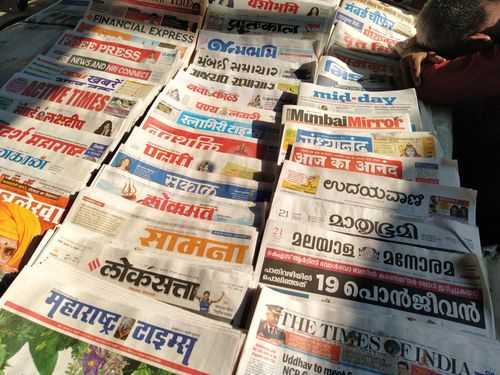
Within this framework, press freedom emerged as a critical enabler. A robust media ecosystem exposes corruption, amplifies marginalised voices, scrutinises policy failures, and ensures that development is not reduced to statistics but measured in lived human outcomes, said Jayanta.
He examined the mechanisms through which the press contributes to development:
* Accountability: Investigative journalism deters abuse of power and misallocation of resources.
* Inclusion: Media platforms give voice to communities often excluded from policy discourse.
* Information equity: Access to reliable information empowers citizens to make informed economic and political choices.
* Crisis response: In times of conflict or disaster, a free press can prevent misinformation and facilitate effective governance.
“The consequences of suppressing the press, using recent developments in Bangladesh as a case study, shows that even revolts stand in danger of turning into dictatorial regimes.
“The arrests of journalists such as Shyamal Dutta and Farzana Rupa were emblematic of a broader pattern of media intimidation, which curbed dissenting voices and delegitimised the intern government which ruled Bangladesh after Sheikh Hasina’s government was ousted by a student revolt.
“Such muzzling of the media eroded institutional credibility and weakened the moral authority of the administration led by Muhammad Yunus.
“Rather than consolidating control, the curtailment of press freedom contributed to a legitimacy deficit. By silencing dissent and narrowing the information space, the regime and its affiliated actors became increasingly disconnected from public sentiment. This, played a role in galvanising political opposition and shaping electoral outcomes, ultimately leading to the rejection of the ruling establishment and its proxies.”
“Neither human rights nor development without a free press is complete …
Jayanta said development without freedom was fragile. If a nation was asked to remain poor but supposedly free, its people would not be able to appreciate what freedom means.
“Let us face facts – the third world wants freedom want hunger, from want, as it does the freedom to speak out and be counted. To ensure basic human dignity and true freedom, human rights and development has to go hand in hand,” he said.
To ensure development work did take place, the only way out was to ensure a free press which wold point and question how funds were utilised, how works were completed, how far development ensured equitable justice.
“Neither human rights nor development without a free press is complete. For nations seeking long-term progress, safeguarding journalistic independence is not a concession, it is a strategic imperative.
“Let us call out to policymakers, civil society, and media institutions to reaffirm their commitment to press freedom as a cornerstone of democratic resilience and human development in order to usher in a better world.”
ASHEQUN NABI CHOWDHURY, writes a personal view on what the occasion of World Press Freedom Day means to Bangladesh:
This year’s World Press Freedom Day theme – “Shaping a Future at Peace: Promoting Press Freedom for Human Rights, Development, and Security” – rests on a universal premise: peace cannot take root where truth is criminalised. As UNESCO and the Government of Zambia prepare to convene governments, journalists, technologists, rights groups, and global civil society in Lusaka for the 2026 observance, the message is clear – independent journalism is not an optional component of peace, it is its foundation.
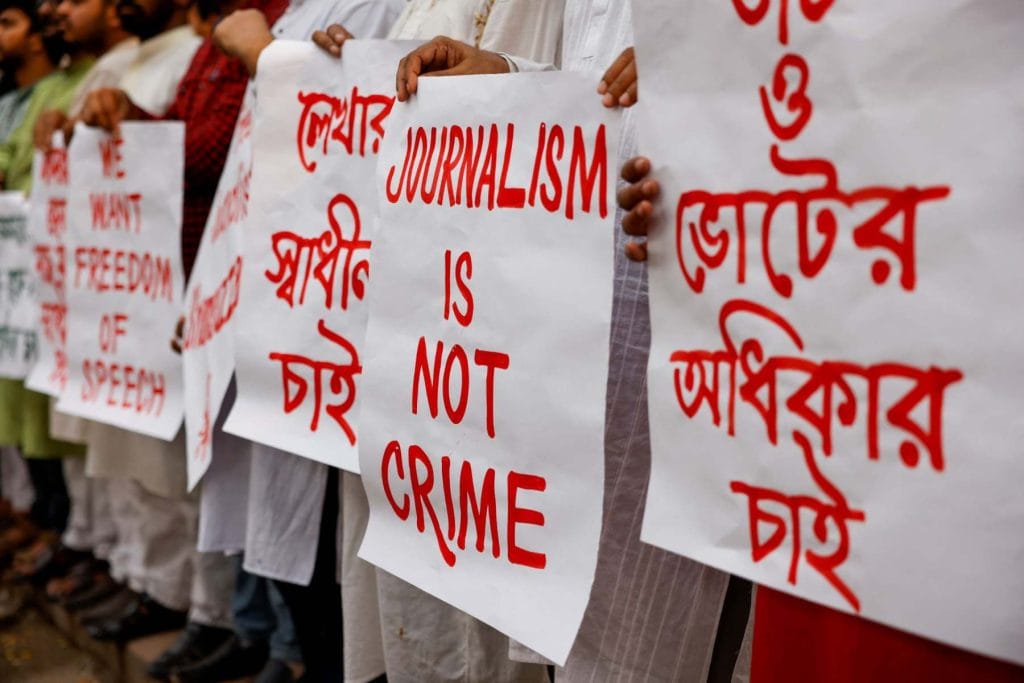
Bangladesh now stands as one of the starkest departures from that principle. While the international community reaffirms the press as a pillar of security and democratic resilience, more than a hundred Bangladeshi journalists continue to face charges as severe as “crimes against humanity” for reporting on the 2024 unrest.
Despite the change in government following the 12 February 2026 election, conditions for press freedom and free expression remain deeply constrained. Intimidation, arbitrary arrest, and assaults on journalists persist, and individuals continue to face reprisals for expressing opinions on social media.
In recent months, media outlets and international rights organisations have documented multiple incidents in which ruling‑party activists abducted and assaulted journalists and social‑media users before handing them over to police, who then arrested the victims and brought charges for allegedly making “derogatory” remarks about the Prime Minister.
Sustained hostility to independent reporting
These cases illustrate a broader pattern in which political activists initiate violence and law‑enforcement authorities formalise it through criminal charges, creating an environment where journalists and ordinary citizens face physical assault, arbitrary detention, and severe legal consequences for expression of opinion. This sustained hostility toward independent reporting and online speech demonstrates that the threats to press freedom in Bangladesh remain acute, even under the new administration.
Press freedom organisations have described this escalation as unprecedented in both scope and legal severity. They have called for the immediate release of all journalists detained on politically motivated or unfounded charges, and for an end to the wider repression of media workers and citizens exercising their right to free expression.
Without such steps, Bangladesh risks remaining trapped in a cycle of control that obstructs the free flow of information – a fundamental requirement for peace, accountability, and democratic stability. Yet the current government has taken no meaningful action beyond issuing assurances that it will not intimidate the media, statements that ring hollow against the continuing arrests and assaults.
World Press Freedom Day 2026 offers an opportunity to examine Bangladesh’s situation not as an isolated national issue, but as part of a wider global pattern in which state authorities, legal frameworks, digital technologies, and ruling‑party supporters are used to restrict free press and civic space.
As policymakers, technologists, and civil‑society leaders gather in Lusaka, Bangladesh must be among the countries central to the discussion. The country’s experience raises urgent questions about how authorities, laws, institutions, and digital systems can be reformed to safeguard press freedom rather than undermine it. Ensuring that journalists can work without fear is not only essential for Bangladesh’s internal stability — it is integral to the global effort to build peaceful, rights‑respecting societies.
