
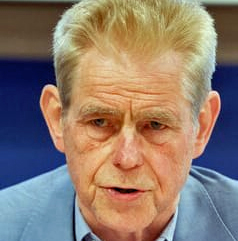
By CJA Executive Committee member WILLIAM HORSLEY
27/10/26
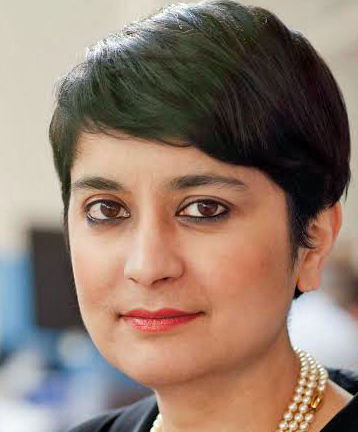
The Commonwealth Journalists Association welcomes the prominent British parliamentarian Baroness Shami Chakrabarti’s call for far-reaching judicial and legal reforms in Malta, a Commonwealth member state, to end impunity and strengthen the rule of law there.
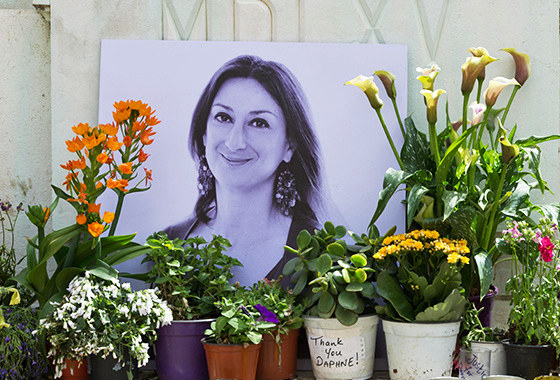
Chakrabarti, a respected lawyer and former director of Liberty, is heading a Council of Europe inquiry into Justice delayed: the unfinished implementation of the Daphne Caruana Galizia case . She was appointed after a Maltese businessman Yorgen Fenech, who became a key suspect in the shocking murder of investigative anti-corruption journalist Daphne Caruana Galizia in 2017, walked free from the dock after being acquitted by a jury on 2 September.
The hitmen and several others who played a part in the assassination of Daphne Caruana Galizia have faced justice and some are in jail. But Mr Fenech was acquitted in a court of first instance on charges of instigating and financing the murder, despite what observers called compelling evidence presented in court. Efforts are being made to appeal the court’s verdict or secure a re-trial.
The corrosive prevalence of judicial impunity in Commonwealth states – especially in cases involving the deaths of journalists and other public watchdogs in countries in South Asia and Africa as well as Malta – deserves to be addressed robustly at the Commonwealth Heads of Government Meeting (CHOGM) being held in Antigua and Barbuda in the Caribbean from November 1-4.
Shami Chakrabarti called the acquittal “staggering” to many. She recalled that an independent public inquiry in Malta into Daphne Caruana Galizia’s death concluded five years ago that the Maltese State must bear responsibility, having created “a climate of impunity generated from the highest levels and failing to take preventive measures to protect her life”.
That earlier inquiry had also found that these events had led to a near-collapse of the country’s institutions and the rule of law, yet many of the fundamental reforms that inquiry recommended have not been implemented. The results of the fresh inquiry by Council of Europe parliamentarians will be published next year,
A Commonwealth of empty words or action now?
Today the CJA calls on the leaders of the 56 member countries of the Commonwealth to honour the pledge they made at the last CHOGM meeting in Samoa in 2024, when they declared that the member states “must take decisive action to end impunity”. The commitment was contained in the 11-point Commonwealth Principles on Freedom of Expression and the Rule of Law which the Heads approved as a key outcome document of the meeting.
The formal adoption of those Media Principles capped an arduous 8-year long campaign led by the CJA, together with the Commonwealth-affiliated associations of lawyers, parliamentarians, as well as the Commonwealth Human Rights Initiative and the Institute of Commonwealth Studies. But the promised ‘partnership’ with member states and the Commonwealth Secretariat to deliver meaningful results is still awaited!
We ask Commonwealth leaders to heed the words of Baroness Chakrabarti: “The failure to ensure individual accountability for the murder risks perpetuating a culture of impunity: a culture where corruption thrives, the most heinous criminal acts go unpunished, and where those who try to shine a light in the darkness pay the ultimate price.”
Now is the time. The Foreign Minister of Malta currently holds the prestigious chairmanship of the Commonwealth Ministerial Action Group , which is seen as the closest thing the organisation has to an accountability mechanism.
CMAG is mandated to ensure that states that excessively restrict civil society and legitimate media freedoms are challenged and constrained – if necessary even by suspension from the organisation. The Commonwealth needs to protect itself against the suspicion of a crippling conflict of interest. It is imperative that member state governments show by their actions that their repeated claims to champion democratic process and accountability are not a sham.
Impunity as a “first order issue”
The issue of impunity for violence against journalists and other public scrutiny bodies has climbed up the international agenda in recent years, as the link between “media capture” and a global slide towards authoritarian government has become obvious. Effective solutions are enshrined in the 2012 UN Action Plan for the Safety of Journalists and the Issue of Impunity whose obligations on states and high standards of protection for press freedom and journalists’ safety the Commonwealth has also promised to respect.
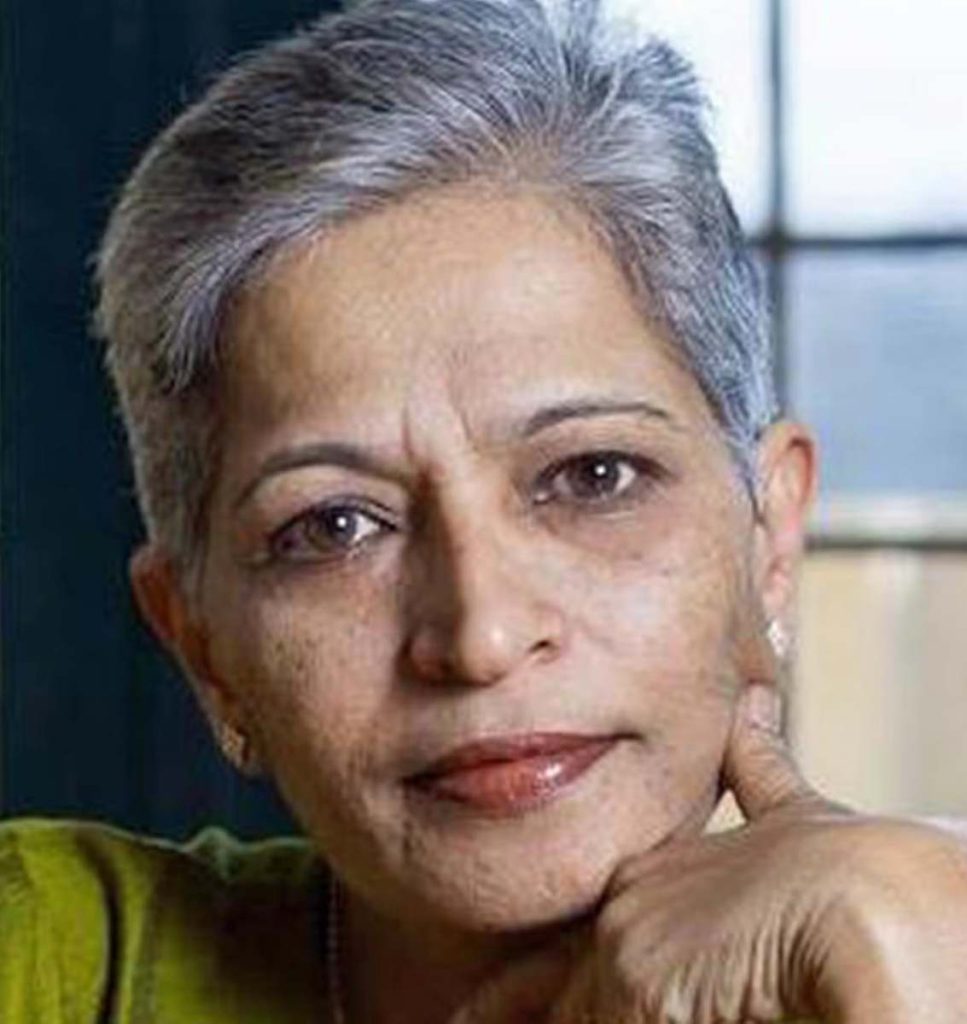
Other iconic examples of targeted killings of journalists who exposed corruption and serious abuses of power in Commonwealth countries include Indian journalist Gauri Lankesh , an outspoken critic of abuses by state authorities, who was shot dead outside her home in 2017, and Ahmed Hussein-Suale Divela. a Ghanaian journalist, shot and killed in a street in Accra in 2019 after contributing to a sensational exposé of corruption in African football. What links these cases to that of Daphne Caruana Galizia is that many years later those ultimately responsible for the killings continue to escape punishment.
“Commonwealth grassroots demands for justice will not be quelled. A dark stain must be removed.“
UNESCO’s Observatory of Killed Journalists shows that judicial impunity prevails in as many as 96 percent of cases in which journalists have been murdered in Commonwealth jurisdictions over the past couple of decades. That record should be totally unacceptable to the Commonwealth as an organisation whose reputation and very identity rest on its claim to champion democratic standards and the rule of law.
In 2025, a landmark publication Who Controls the Media? Legal Restrictions on Freedom of Expression in the Commonwealth was published by three Commonwealth associations. Its findings were shared with Commonwealth decision-makers to aid a fuller understanding of the effects of repressive colonial-era laws and other systemic governance flaws. The 175-page report offered positive pathways to collaborations between state authorities and trusted non-government groups to tackle deep-seated problems together. The Commonwealth’s silence about this shameful growth in “cultures of impunity” can only make the problem worse and damage its reputation in the eyes of the world.
The November 1-4 Commonwealth Heads of Government meeting in Antigua and Barbuda must not be just a carnival or a time for self-congratulation. The scourge of impunity has infected the organisation and that dark stain must be removed,
Delegates at this celebration of Commonwealth values can no longer look away.
