
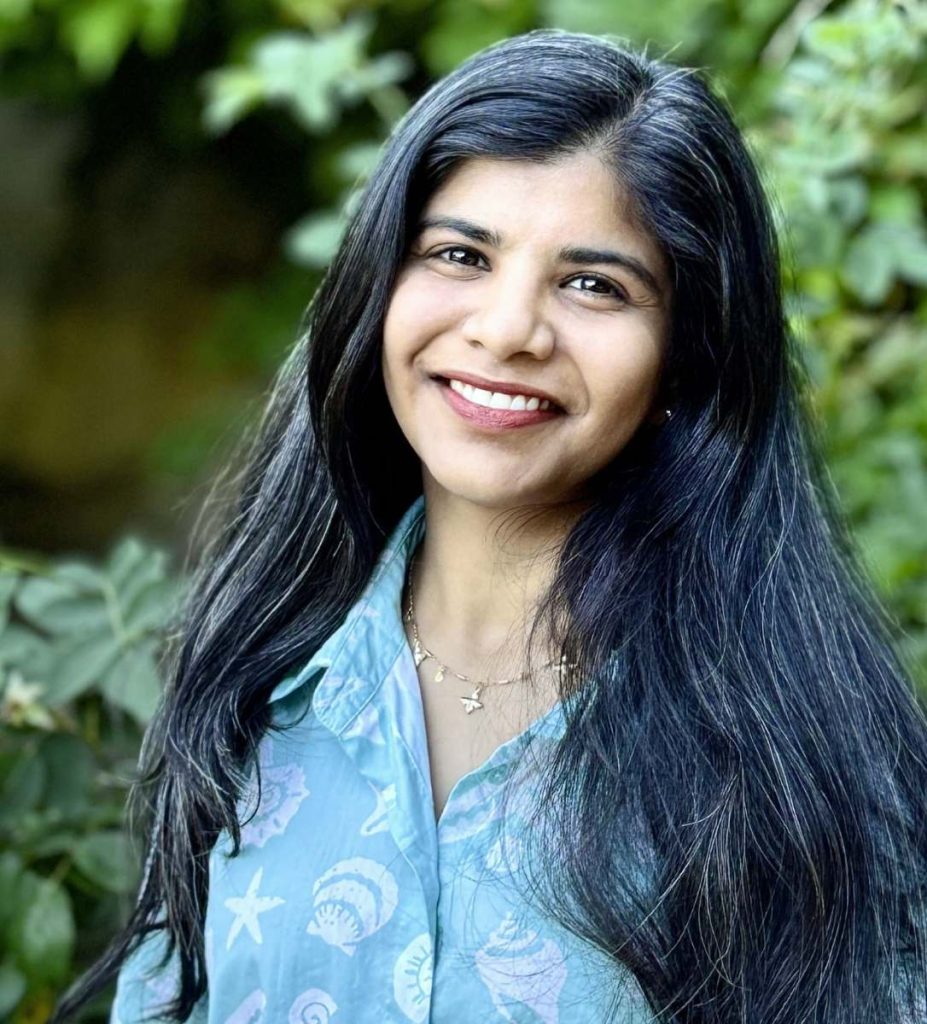
By SHUCHITA Jha, an Indian freelance journalist and solutions journalism trainer who writes about environmental, health and rural community stories. She spent two months at Westminster University from April to June as a Chevening Fellow on a programme for mid-career journalists from South Asia.
27/7/2026
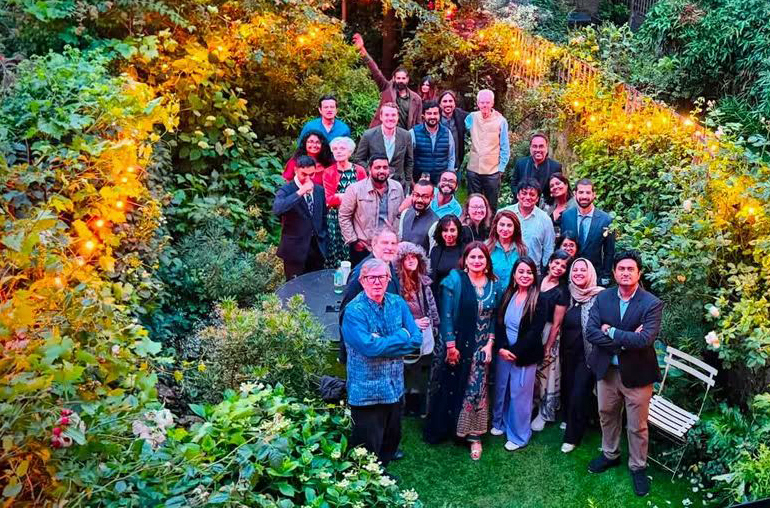
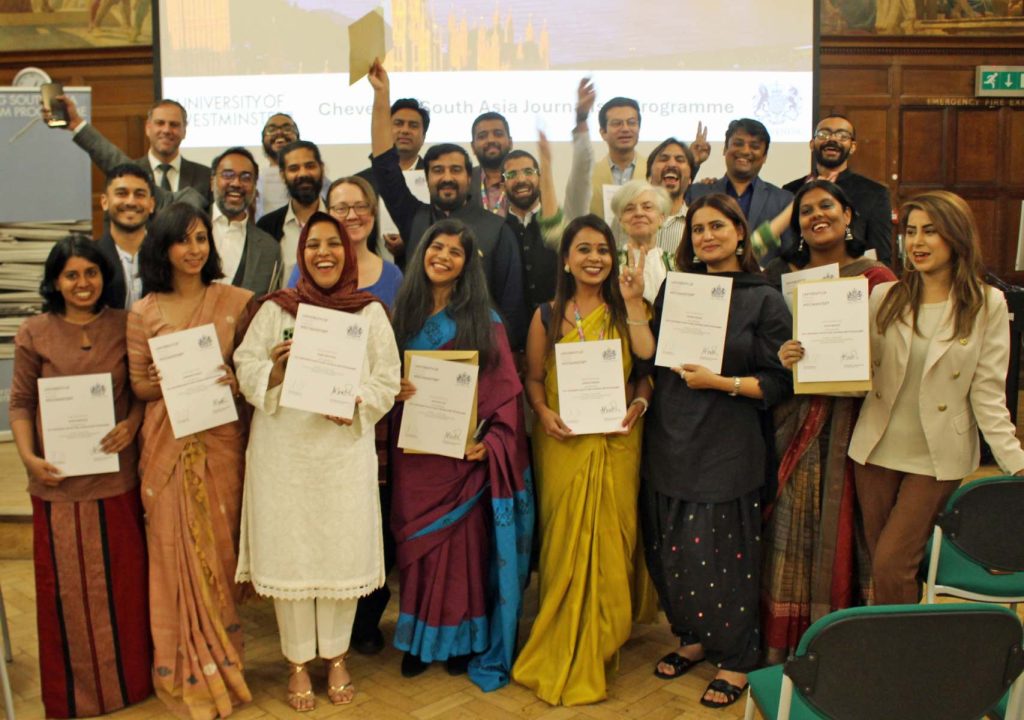
It is now over a month since I came back from London after completing the Chevening South Asia Journalism Fellowship Programme (SAJP), funded by the UK Foreign, Commonwealth and Development Office. But part of my heart was left with the other 19 fellows who also returned to various parts of India, Pakistan, Bangladesh and Sri Lanka. It might seem strange, but now I feel homesick for the Paddington City View in London that became a kind of haven with the other fellows for two whole months.
Chevening was something I heard about when I was still a cub reporter at The Times of India, Bhopal, in 2017. My then Resident Editor, Prasenjit Mund, was an alumnus, and he inspired me. But I had to wait my turn as the fellowship was for mid-career journalists. So when I got the selection email in January 2026, it was a dream come true.
The fellowship is special to me for many reasons, but above all for the privilege of being together in the same place with journalists from other South Asian countries at the same time. This was the first time that I had the opportunity to do anything like this. We met at first with awkward hellos, sharing our credentials, as if justifying to ourselves why we deserved to be with the cohort in this prestigious, one-of-a-kind fellowship held under the guidance of veteran journalist and teacher, Professor Jean Seaton of the Westminster School of Media and Communication.
“The insights we had gained through our Chevening fellowships into ways of reporting on the on-the-ground realities of those who live under authoritarian regimes gave us all, I think, a little more courage and hope.”
The superbly well-curated eight weeks included discussions with renowned figures including Isabel Hilton, founder of Dialogue Earth (formerly China Dialogue), Peter Geoghegan founder of Democracy for Sale, Jim Waterson, founder of London Centric and Phillip Collins, editor at Prospect, and David Loyn, the veteran former BBC journalist. The lectures expanded my journalistic network and understanding of the media in the United Kingdom, and helped me discover novel and creative ways to carry out journalism in challenging news environments. Productive and meaningful discussions with editors from the BBC, The Guardian, and Nature gave me deeper insights into international journalism and led to professional interactions with those leading editors, a key to possible future collaborations.
Our very first visit as a cohort was to the British Library, where the curators have painstakingly kept the legacy of South Asia alive in their remarkable archives. These age-old documents, writing instruments, hand-written letters, and currency and tax records, made me realise that history books can hardly do justice to the hard realities of the colonisation of the Indian subcontinent, its literature and philosophy, and its struggle for independence.
Out of curiosity I asked Dr. Marina Chellini, Curator of North India Collections at the British Museum, if they had any archives from Jhansi, my home town – a historic city, noted for its part in the first war of independence of 1857 under Maharani Lakshmi Bai. To my surprise the Library has preserved the manuscript of Hatha Yoga’s exposition of Bhakti traditions, which was physically looted from Jhansi when it fell into the hands of the British Raj in 1858 after the revolt.
What Dr Chellini told me about those detailed records sent chills down my spine, gave me goosebumps, and made my eyes water. As a former colony of the British Empire, we live amid constant reminders of the past. But sometimes the old forts, castles, jails and memorials seem to merge into mundane everyday life, and they cease to have the impact they did in childhood. It is only when we discover something new about our past that the truth of it washes over us all over again.
When we stepped into Oxford, it felt like going back in time. Visiting Sommerville, the alma mater of India’s former Prime Minister Indira Gandhi, left me in awe of the exceptional personalities it has produced. Pakistan’s former Prime Minister Benazeer Bhutto attended Lady Margaret Hall and St Catherine’s College.
To conclude the fellowship programme we organised a symposium titled ‘Who Controls The Media in South Asia’. It consisted of three panels to discuss the rise of content creators in the journalistic landscape, the challenges and advantages posed by AI, and the rise of independent and niche media, in the age of Big Tech and authoritarianism. I got the opportunity to moderate the last panel with four independent newsroom editors – Dipankar Ghosh, Editor-in-Chief, Dialogue Earth; Charlotte Tobbit, UK Editor, Press Gazette; Azzam Ameen, Founder News Wire (Sri Lanka) and Wahid Ali Rajput, Co-founder The Centurum Media (Pakistan).
Immensely fruitful discussions followed on many aspects of press freedom, Western biases in South Asian stories, and the challenges thrown up by transformative new technologies. The insights we had gained through our Chevening fellowships into ways of reporting on the on-the-ground realities of those who live under authoritarian regimes gave us all, I think, a little more courage and hope.
Living in London also helped me to grow in unexpected ways. In India I rarely walk on the roads due to factors including traffic and safety issues, but I clocked up over 20,000 steps every day. That may not be a lot for a Londoner, but it was a milestone for me. With it came a sense of freedom that I did not even know I was deprived of in my home country because of the poor infrastructure. I may have complained about the high step count at the time, but now miss it terribly.
Somewhere during the lectures at the University of Westminster on Regent’s Street, the shared laughter and long walks to reach destinations throughout the city, a sense of belonging tied us together, forging lifelong friendships. We came to understand each other’s strengths and struggles, often sharing more than we thought we ever would.
I resonate with another fellow and friend, Johanna Deeksha’s uplifting thought that being together in London – having hearty discussions, sightseeing, theatre, and enjoying a guilt-free break, healed a little bit of the heartbreak we carried because of the hatred and chaos all around us back home. The culmination of the fellowship left many of us in tears.
Sarah O’Meara, SAJP 2026 Programme Director and Raunak Mainali, Research Associate at University of Westminster painstakingly kept the herd together during group visits and helped us at each step of the fellowship making it a roaring success. Jean’s repeated warnings to keep our phones with us still echoes in my ears when I step out of the house. It was an honour and a delight to be under her wing for two whole months.
I think it is safe to say that in the spring of 2026 I became a lot richer, not in the conventional sense of possessing more money, but in something far greater — acquiring valuable experience and friendships.
- Shuchita Jha’s science journalism in Nature India https://www.nature.com/articles/d44151-026-00142-5
- See Shuchita Jha’s participation in the CJA podcast New Digital Media, telling untold stories https://www.youtube.com/watch?v=bJFfH5uItwA
- Chevening https://www.chevening.org/
