
By SYED BADRUL AHSAN
24/3/26
In the more than a month that has gone by since the Bangladesh Nationalist Party ascended to power through a non-inclusive election, worries have persisted about the moves not made by the new government. The expectation had been that the new men and women in power would move quickly to roll back the damage inflicted on the rule of law by the unconstitutional Yunus regime in the eighteen months in which it kept Bangladesh in its vicious grip.
The expectation has not been met, at least not so far. Of course, the reputed journalist Anis Alamgir, who was arrested in the final phase of the Yunus regime (and Alamgir had been and continues to be outspoken in his criticism of the Yunus outfit), was recently released on bail. On the Muslim occasion of Eid-ul-Fitr, Alamgir met President Mohammad Shahabuddin and later received a call from Prime Minister Tariq Rahman, which many see as a sign of positive things that are to be in course of time.
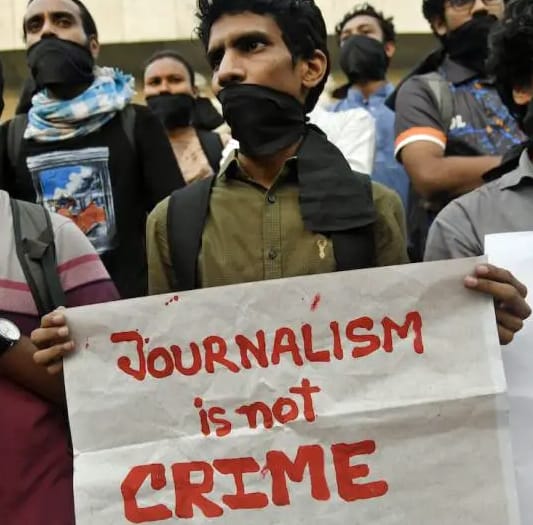
Even so, the hard truth is that a number of journalists continue to languish in prison on trumped up charges initiated by Yunus’ mob loyalists. No measures have yet been taken by the new government to have these journalists – and among them are the couple Shakil Ahmed and Farzana Rupa, Mozammel Babu and Shyamal Dutta – freed.
Though there have been statements by loyalists of the government about ensuring the freedom of the media, little or nothing has yet been done to reassure the country that journalism will return to the space it occupied prior to the overthrow of the elected government of Sheikh Hasina in August 2024.
That begs the question: How much longer does Bangladesh have to wait to see concrete measures taken to have the rule of law return in the lives of its citizens? The journalists who have been in prison for more than nineteen months now were slapped with false cases and have repeatedly been denied bail. A good number of them are ailing in prison. Accused, improbably, of such offences as murder, they have not had any recourse to justice.
It is an unprecedented situation in the country. To be sure, journalists have in the past and under different governments been carted off to prison on various charges. But they possessed the right to bail, indeed to a restoration of their freedom.
“The rule of law demands, now as always, that journalists not be persecuted and prosecuted for doing their job … “
But the Yunus regime, clinging to power through its mobs, indulged in a wholesale programme of taking journalists into detention without making available to them the usual legal means through which they could challenge the grounds of their detention. In the eighteen months of their misrule, Yunus and his regime spread the lie, at home and abroad, that the media enjoyed absolute freedom in the country.
The truth was something else. It was that by detaining journalists, it deliberately muzzled the press, to a point where newspapers and the ubiquitous television networks were prevented from raising any questions about or airing any views related to the rule of law.
It is a bad legacy the BNP government, in its own interest, does not have to perpetuate. To this day, thousands of individuals pushed into prison by Yunus’ mob politics – and they include people across the professional spectrum – remain in jail. Tariq Rahman and indeed the ministry of information as well as the judiciary should be moving swiftly to have all of these individuals freed to return home.
Law gravely undermined
A bold beginning can be made through correcting the many wrongs that have been done to the journalists’ community, for the good reason that such global bodies as the influential Commonwealth Journalists Association have been vocal in demanding that all detained journalists be freed.
The rule of law was gravely undermined in Bangladesh by the Yunus illegitimacy, not merely through the detention of journalists. In its time in power, the regime bent over backwards to prevent journalists who had not fallen into the dragnet of detention from carrying out their professional responsibilities following the cataclysm descending on Bangladesh in August 2024.
Information was sought by the authorities about the personal bank accounts of journalists, a move that was unable to reveal anything spectacular. It was clearly a move to dig up dirt on the journalists. The move backfired, but the journalists’ bank accounts remained frozen, which effectively pushed them into penury given that having been thrown out of their jobs they were now unable to withdraw money to ensure the upkeep of their families.
Moral responsibility
The new government will obviously be in need of a media that it would like to be friendly or sympathetic to it. The rule of law demands, now as always, that journalists not be persecuted and prosecuted for doing their job. For the government, therefore, it becomes a moral responsibility now to free all victimised journalists of the straitjacket they were put in by the Yunus outfit. Quick and judicious action will be a test of the lengths to which the government means to go in implementing the democratic objectives it has set for itself.
For the government, the message ought to be without ambiguity. It is that no government should take upon itself the irresponsible task of condemning journalists for the politics they uphold as individuals. What matters is the degree of professionalism journalists bring into their work. Journalists are there to keep a check on the exercise of governmental authority. When they are prevented from doing such duties, it is a clear violation of the rule of law that undermines the entire concept of democracy.
There were other transgressions the Yunus regime and its unruly followers committed in the days, weeks and months after the fall of the Awami League regime. Newspaper offices came under mob assault, with some of them set on fire; television channels were barged into, with mobs demanding that certain journalists be dismissed; media houses were simply taken over, with new people seizing the premises and the legally operating executives and their staff forced to quit.
The rule of law, as is evident, was subjected to gross violation. Moreover, columnists reputed for their articles over the years found themselves blocked from presenting their points of view across in the media.
National renewal
The task for the new government, therefore, is daunting but one that must be done. The government does not have to carry the burden of the Yunus regime’s medieval legacy on its shoulders. Where Yunus and his outfit systematically trashed every bit of decency in the country, pulverised every symbol of national dignity, the government now in office must not only roll back that darkness but also see to it that the ghosts of illegitimacy do not jeopardise the nation’s efforts towards a renewal of the constitutional basis of politics in the country.
Briefly, let the rule of law be restored through freeing all detained journalists, unfreezing the bank accounts of all journalists victimised by the illegal regime and purging all media organisations of elements who commandeered them in the aftermath of the mob violence which pushed citizens into a reign of terror in August 2024 and throughout the eighteen months that followed.
Rule by the mob has shamed the country around the world. Which is why the rule of law is an imperative in Bangladesh today.
*This article first appeared in the Indian newspaper North-East News.
